
Tacos al Pastor Recipe: How to Make It at Home
Tacos al pastor are small corn tortillas filled with thin slices of pork marinated in dried chiles, achiote and pineapple, roasted until the edges char. They are topped with onion, cilantro and diced pineapple.
In Mexico, the pork roasts on a vertical spit called a trompo. At home, you can get close by stacking the marinated slices on skewers, roasting them in the oven, then crisping the shaved meat in a hot skillet.
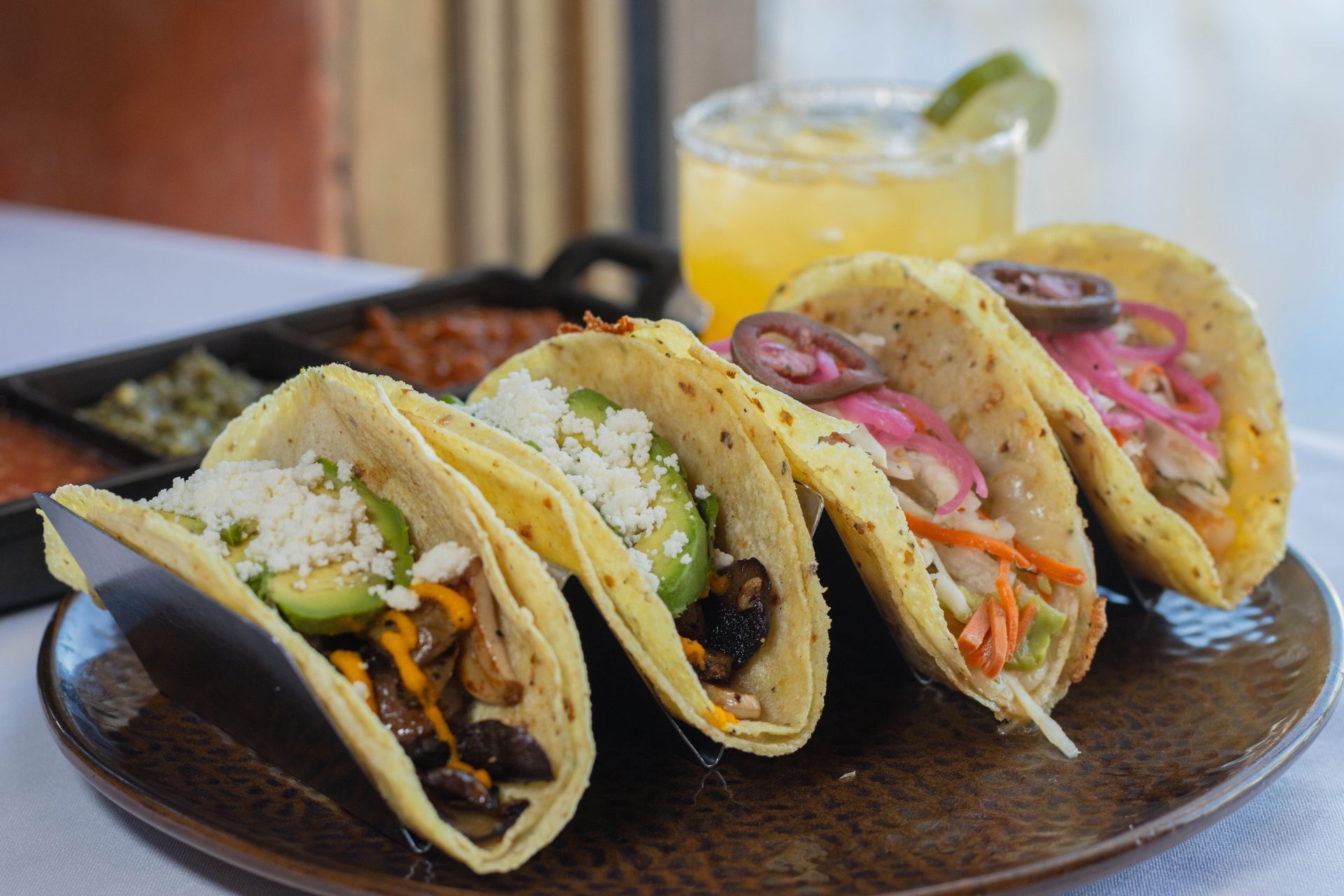
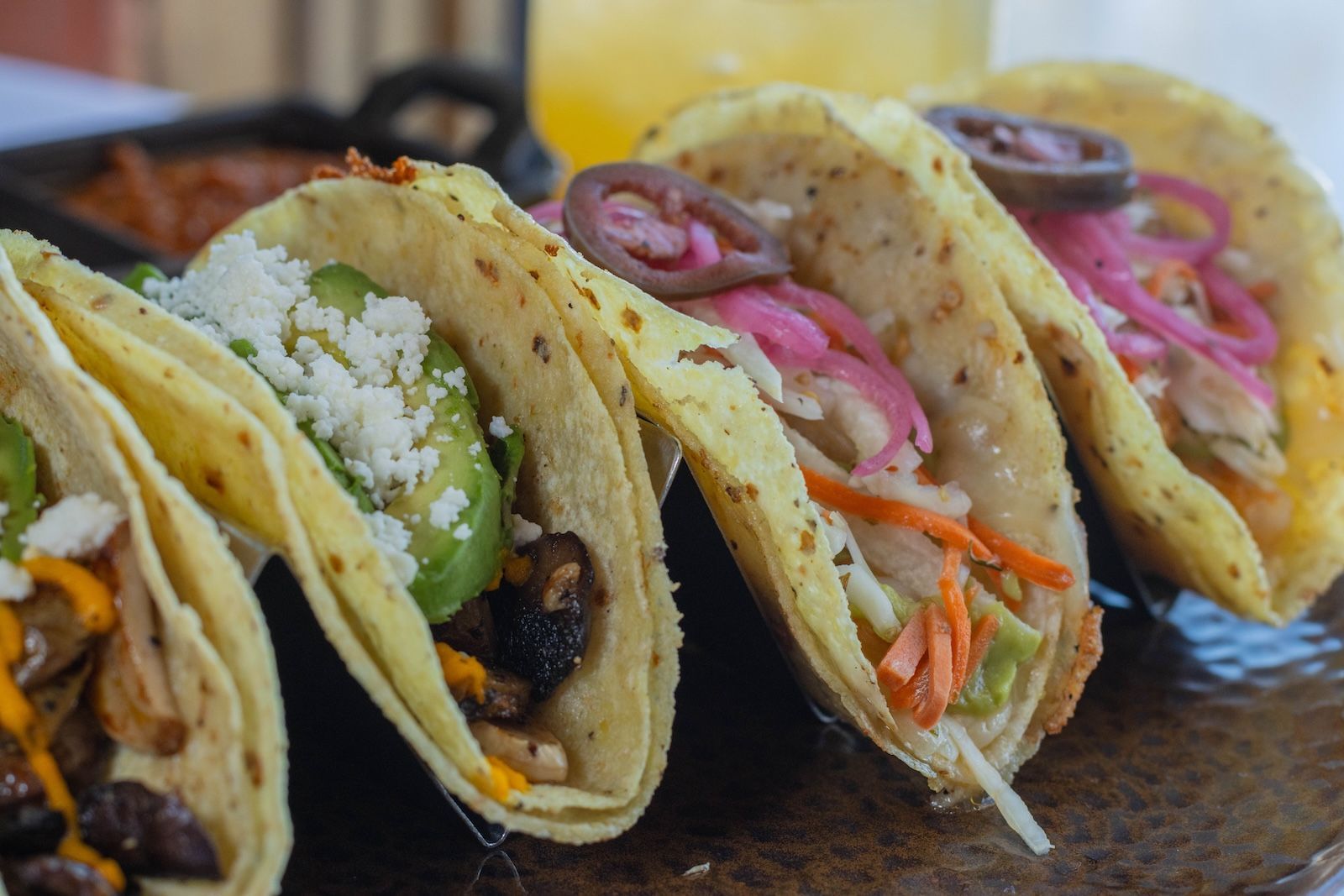
This recipe covers the marinade, the best pork cut, an oven-stack method plus grill and skillet options, a vegetarian cauliflower version, food safety and toppings. If you want the meatless style without cooking, you can eat the cauliflower al pastor tacos at Mi Casa in Breckenridge.
What Are Tacos al Pastor?
Tacos al pastor are spit-roasted pork tacos from central Mexico. Al pastor means "shepherd style" in Spanish.
The method came from Lebanese immigrants, who brought shawarma to Mexico in the late 1800s and early 1900s. Cooks swapped lamb for pork, marinated it in adobo and served it on corn tortillas.
The meat question has its own guide: read up on which meat goes into al pastor, its history and how it differs from shawarma. This page is about making it.
Ingredients for Tacos al Pastor
This recipe makes about 24 small tacos, enough for 6 people.
For the Pork
- 3 pounds boneless pork shoulder (also sold as Boston butt)
- 2 teaspoons kosher salt
Pork shoulder is the standard cut for al pastor. Its fat keeps thin slices juicy under high heat.
For the Marinade
- 3 dried guajillo chiles
- 2 dried ancho chiles
- 2 ounces achiote paste (about 1/4 cup)
- 3/4 cup canned pineapple juice
- 1/4 cup white vinegar
- 4 garlic cloves
- 1/4 white onion
- 1 chipotle in adobo, plus 1 teaspoon of the sauce (optional, for smoke and heat)
- 1 teaspoon dried Mexican oregano
- 1 teaspoon ground cumin
- 1/2 teaspoon black pepper
- 1/4 teaspoon ground cloves
- 1/4 teaspoon ground cinnamon
Achiote paste is made from annatto seeds, from the achiote tree. It gives al pastor its red-orange color and an earthy, peppery taste. Look for it in the Latin aisle in small blocks.
For the Tacos
- 1 small ripe pineapple, peeled and cut into 1/2-inch rounds
- 24 small corn tortillas (street-taco size, about 4 1/2 inches)
- 1 white onion, finely chopped
- 1 cup chopped fresh cilantro
- 3 limes, cut into wedges
- Salsa: a red chile salsa or a fresh tomato salsa
Equipment
- Blender
- Small saucepan for the chiles
- Large zip-top bag or covered dish for marinating
- 9 x 13 inch baking dish or rimmed sheet pan
- Two long metal skewers, 10 to 12 inches
- Large cast-iron skillet or griddle
- Sharp chef's knife
- Instant-read thermometer
How to Make Tacos al Pastor
Total time is about 2 1/2 hours of cooking plus at least 4 hours of marinating. Overnight is best.
Step 1: Make the Marinade
- Stem and seed the guajillo and ancho chiles.
- Simmer them in water for 10 minutes, until soft. Drain.
- Blend the chiles with the achiote paste, pineapple juice, vinegar, garlic, onion, chipotle, oregano, cumin, pepper, cloves, cinnamon and salt.
- Blend until completely smooth, about 2 minutes. The marinade should be thick, like ketchup.
Step 2: Slice and Marinate the Pork
- Put the pork in the freezer for 30 minutes. Firm meat slices more cleanly.
- Slice the pork across the grain into 1/4-inch slabs.
- Coat every slice in the marinade in a bag or dish.
- Refrigerate at least 4 hours, or up to 24 hours.
Step 3: Build the Stack
- Heat the oven to 350°F.
- Lay one thick pineapple round in the center of the baking dish. Push both skewers upright through it, about 2 inches apart.
- Thread the pork slices onto the skewers one by one, pressing them down into a tight stack.
- Top with another pineapple round. This looks like a small trompo lying in a pan.
If the skewers will not stand, lay the stack on its side in a loaf pan. It still roasts well.
Step 4: Roast the Al Pastor
- Roast the stack uncovered for 1 1/2 to 2 hours, until the outside is dark red and charred at the edges.
- Baste once or twice with the pan juices.
- Check the thickest point with a thermometer. Pork is safe at 145°F after a 3-minute rest, but a stack this tight shaves best when it runs hotter, around 165°F to 175°F.
- Rest 10 minutes.
Step 5: Shave and Crisp the Meat
- Stand the stack upright and shave thin slices down the sides with a sharp knife, like a taquero.
- Heat a cast-iron skillet over high heat with a teaspoon of oil.
- Sear the shaved meat in batches for 1 to 2 minutes, until the edges crisp.
- Do not crowd the pan, or the meat steams instead of browning.
Step 6: Char the Pineapple and Assemble
- Sear the remaining pineapple rounds in the hot skillet, 2 to 3 minutes per side, until caramelized.
- Dice the pineapple into small pieces.
- Warm the tortillas on a dry griddle until soft and spotted. Stack two per taco if they are thin.
- Fill each with meat, then top with onion, cilantro and pineapple.
- Serve with lime and salsa.
Other Ways to Cook Al Pastor at Home
You do not need a trompo or even a stack. These three methods use the same marinade.
- Oven stack: Skewered stack at 350°F, then shaved and seared (time: About 2 hours; best for: The closest home version of trompo meat)
- Grill: Marinated slices over high heat with pineapple rounds (time: 3 to 4 minutes per side; best for: Smoky char, summer cooking)
- Skillet: Marinated slices seared in cast iron, then chopped (time: 3 to 4 minutes per side; best for: Weeknights, small batches)
- Broiler: Slices on a rack under the broiler (time: 4 to 6 minutes per side; best for: Quick char without a grill)
For grill, skillet and broiler, cook thin slices until browned and at least 145°F, then rest 3 minutes. Chop the meat on a board before filling the tacos.
Tips for the Best Al Pastor
- Use canned or bottled pineapple juice in the marinade. Fresh pineapple holds bromelain, an enzyme used to tenderize meat. Cooked or canned pineapple has no tenderizing effect, so it will not turn the pork mushy overnight.
- Slice thin. Thin slices pick up more marinade and more char.
- Press the stack tight. A loose stack dries out; a tight one stays juicy inside.
- Crisp after shaving. The skillet step gives the browned edges a street taquería gets from the spit.
- Taste the marinade. It should be bold, tangy and a little salty before it touches the pork.
- Keep toppings simple. Onion, cilantro and pineapple are the classic trio. Add simple homemade guacamole on the side, not on top.
Cauliflower Al Pastor (Vegetarian Version)
The same marinade works on cauliflower. Roasting gives it charred edges and a smoky, meaty bite.
- Cut 1 large head of cauliflower into bite-size florets.
- Toss with half the marinade and 2 tablespoons of oil.
- Spread on a sheet pan in one layer.
- Roast at 425°F for 25 to 30 minutes, turning once, until tender and charred at the edges.
- Fill tortillas and top with pineapple salsa, an avocado salsa, green onion and cilantro.
Check the labels if you are cooking vegan: some chipotle and achiote products include other ingredients.
Variations
- Chicken al pastor: Use boneless chicken thighs. Marinate 4 to 12 hours and cook to 165°F.
- Gringas: Fill flour tortillas with al pastor and melted cheese, a northern Mexican style. Homemade flour tortillas make them even better.
- Al pastor bowl: Serve the meat over rice with beans, pineapple and salsa.
- Tortas and burritos: Al pastor also fills tortas, burritos, alambres and huaraches.
- Spicier al pastor: Add 2 to 3 chiles de árbol to the marinade.
High-Altitude Notes for Al Pastor
Al pastor is oven-roasted or grilled, so it needs fewer high-altitude changes than braised dishes. Colorado State University Extension says oven temperatures are not affected by elevation.
Mountain air does change two things. Low humidity makes moisture evaporate faster during cooking, and CSU notes that covering food helps hold it in. In Breckenridge, at about 9,600 feet, tent the stack loosely with foil for the first hour, then uncover it to char.
The chile-soaking step also takes longer up high. Water boils at about 193°F at 10,000 feet, per CSU, so give the chiles a few extra minutes to soften.
Safe Internal Temperature for Pork al Pastor
The FoodSafety.gov chart sets the safe minimum for pork steaks, roasts and chops at 145°F, with a 3-minute rest. Ground pork and leftovers have higher marks.
- Pork steaks, roasts and chops: 145°F, then rest 3 minutes
- Ground pork: 160°F
- Chicken (for chicken al pastor): 165°F
- Leftovers, any type: 165°F
Make-Ahead, Storage and Reheating
Al pastor is easy to prep ahead. Marinate the pork up to 24 hours before cooking.
- Refrigerate cooked al pastor within 2 hours, in a shallow container.
- Cooked meat keeps 3 to 4 days in the refrigerator, per University of Wisconsin-Madison Extension.
- Freeze for longer storage, and thaw overnight in the refrigerator.
- Reheat slices in a hot skillet until steaming and 165°F. The skillet re-crisps the edges, which a microwave cannot.
What to Serve with Tacos al Pastor
Tacos al pastor are bold and a little sweet, so pair them with fresh, cool sides.
- Charro or black beans
- Mexican rice
- Grilled street corn
- Sliced radishes and cucumber with lime
- Guacamole and chips
- An agua fresca, or a margarita for the adults
For more pairings, see what else to put on the table at a taco dinner. Feeding a crowd with two meats? Add marinated carne asada next to the pork.
Frequently Asked Questions
Can you make al pastor without a trompo?
Yes. Stack the marinated slices on skewers and roast them in the oven, then shave and sear the meat. You can also grill, broil or pan-sear the slices and chop them.
What is a good substitute for achiote paste?
Mix 1 tablespoon sweet paprika with 1 teaspoon each of dried oregano and ground cumin, a pinch of cloves and a splash of extra vinegar. The flavor is close, but the color will be less vivid.
How long should al pastor marinate?
Marinate al pastor at least 4 hours and up to 24 hours. Overnight gives the deepest flavor.
Is al pastor spicy?
Al pastor is usually mild to medium. Guajillo and ancho chiles add flavor more than heat. Add chipotle or chiles de árbol, or a hot salsa, for more kick.
Do you put pineapple in the marinade or on top?
Both, in most recipes. Pineapple is part of the classic al pastor marinade, and finely diced pineapple is a standard topping with onion and cilantro.
Al Pastor at Mi Casa in Breckenridge
At Mi Casa Mexican Restaurant & Cantina, our al pastor is cauliflower. We marinate it in a smoky pastor adobo, roast it, and top it with pineapple salsa, avocado serrano salsa, green onion and cilantro.
Cauliflower al pastor street tacos are part of the rotating selection at our daily happy hour in the cantina, from 2 to 5 pm. You will find it on the Mi Casa taco and plate menu, steps from the base of Peak 9.