Corn vs Flour Tortillas: Which Is Healthier?
Corn tortillas are flatbreads made from masa, a dough of corn cooked in limewater and ground. Flour tortillas are flatbreads made from wheat flour, fat, water and salt.
For most people, corn tortillas are the healthier everyday choice. In USDA data, one corn tortilla has about a third of the calories of a typical flour tortilla, less fat, more fiber per gram and almost no sodium. Corn tortillas are also free of gluten when made only from corn. Flour tortillas carry more protein, iron and B vitamins, and they are larger and sturdier.
This guide compares the two by nutrition, ingredients, taste and use. It names the USDA entries behind every figure. It also shows which tortilla to choose when you make or eat dishes like red chile chicken enchiladas, burritos or tacos.
Corn vs Flour Tortillas at a Glance
- Main ingredient: Nixtamalized corn (masa) (flour tortilla: Wheat flour)
- Other ingredients: Water, sometimes salt (flour tortilla: Fat, water, salt, often baking powder)
- Typical size: Small, about 6 inches (flour tortilla: Larger, often 8 to 12 inches)
- Calories per tortilla (USDA): About 52 (24 g tortilla) (flour tortilla: About 146 (49 g tortilla))
- Gluten: None, if 100% corn (flour tortilla: Contains gluten)
- Texture: Firmer, more fragile, toasted-corn flavor (flour tortilla: Soft, stretchy, mild)
- Best for: Tacos, enchiladas, chilaquiles, chips (flour tortilla: Burritos, quesadillas, fajitas)
- History: Pre-Hispanic (flour tortilla: After the Spanish brought wheat in the 16th century)
How Corn and Flour Tortillas Are Made
The two tortillas start from different grains and different processes. That difference explains most of the gap in nutrition and texture.
Corn Tortillas: Nixtamalized Masa
A corn tortilla is a thin, unleavened flatbread made from hominy. It is cooked on a very hot surface, usually an iron griddle called a comal. It was first developed in Mexico in prehistoric times, and it is older than the wheat tortilla.
The key step is nixtamalization. Corn is soaked and cooked in an alkaline solution, usually limewater, then washed and hulled. The Aztec and Maya used slaked lime, called cal, for this.
Nixtamalization does three things that matter here:
- It makes a dough possible. Untreated ground corn cannot form a dough by itself. Nixtamalized corn forms a dough called masa.
- It unlocks niacin. Corn holds little usable niacin, and its tryptophan is unavailable without processing. Corn cooked with lime gave Mesoamericans bioavailable niacin.
- It ties corn to its history. When corn spread to Europe, Africa and Asia, the limewater step was often left out, and pellagra followed.
The word comes from the Nahuatl nixtamalli, joining nextli, "ash," and tamalli, "corn dough." The earliest evidence of the process comes from Guatemala's southern coast, with equipment dated to 1200 to 1500 BCE. The same masa is the base of tamales, as our guide to what goes inside a tamal explains.
Flour Tortillas: Wheat, Fat and Salt
A flour tortilla is made from finely ground wheat flour. The simplest recipes use only flour, water, fat and salt, and commercial tortillas usually add baking powder.
Flour tortillas were invented after the Spanish brought wheat to Mexico in the 16th century. The added fat is what makes them soft, and it is also the main reason they carry more calories. Our homemade flour tortilla recipe shows the method step by step.
Nutrition: Corn vs Flour Tortillas
The figures below come from USDA FoodData Central, SR Legacy data. The entries are "Tortillas, ready-to-bake or -fry, corn" (FDC ID 175036) and "Tortillas, ready-to-bake or -fry, flour, shelf stable" (FDC ID 167535).
The per-tortilla figures use USDA's own portion weights: 24 g for one corn tortilla and 49 g for one flour tortilla. We calculated them from the per-100-gram values and rounded them.
- Calories: 52 (1 flour tortilla (49 g): 146; corn, per 100 g: 218; flour, per 100 g: 297)
- Carbohydrate: 10.7 g (1 flour tortilla (49 g): 24.1 g; corn, per 100 g: 44.6 g; flour, per 100 g: 49.3 g)
- Fiber: 1.5 g (1 flour tortilla (49 g): 1.2 g; corn, per 100 g: 6.3 g; flour, per 100 g: 2.4 g)
- Protein: 1.4 g (1 flour tortilla (49 g): 3.9 g; corn, per 100 g: 5.7 g; flour, per 100 g: 8.0 g)
- Total fat: 0.7 g (1 flour tortilla (49 g): 3.7 g; corn, per 100 g: 2.9 g; flour, per 100 g: 7.6 g)
- Saturated fat: 0.1 g (1 flour tortilla (49 g): 0.6 g; corn, per 100 g: 0.5 g; flour, per 100 g: 1.2 g)
- Sodium: 11 mg (1 flour tortilla (49 g): 364 mg; corn, per 100 g: 45 mg; flour, per 100 g: 742 mg)
- Calcium: 19 mg (1 flour tortilla (49 g): 80 mg; corn, per 100 g: 81 mg; flour, per 100 g: 163 mg)
- Iron: 0.3 mg (1 flour tortilla (49 g): 1.6 mg; corn, per 100 g: 1.2 mg; flour, per 100 g: 3.3 mg)
- Magnesium: 17 mg (1 flour tortilla (49 g): 10 mg; corn, per 100 g: 72 mg; flour, per 100 g: 21 mg)
- Potassium: 45 mg (1 flour tortilla (49 g): 65 mg; corn, per 100 g: 186 mg; flour, per 100 g: 133 mg)
- Folate: 1 mcg (1 flour tortilla (49 g): 58 mcg; corn, per 100 g: 5 mcg; flour, per 100 g: 118 mcg)
- Cholesterol: 0 mg (1 flour tortilla (49 g): 0 mg; corn, per 100 g: 0 mg; flour, per 100 g: 0 mg)
The newer USDA Foundation data point the same way. "Tortilla, corn, shelf stable" (FDC ID 2758997) lists about 215 calories and 4.5 g fiber per 100 g. "Tortilla, wheat flour, shelf stable" (FDC ID 2758996) lists about 299 calories and 731 mg sodium per 100 g.
Two corn tortillas, at about 105 calories, still come in below one flour tortilla. Brands and sizes vary, so check the label on the package you buy.
Are Corn Tortillas Healthy?
Yes. Corn tortillas are a healthy, low-calorie base for a meal. One 24 g tortilla has about 52 calories, under 1 g of fat, 1.5 g of fiber and 11 mg of sodium.
They are also simple foods. Traditional corn tortillas contain corn masa and water, with salt sometimes added. Nixtamalization makes their niacin available, which plain cornmeal does not do.
A tortilla is rarely eaten alone. The healthfulness of the meal depends more on what goes inside it: grilled meat, beans, vegetables and salsa build a lighter plate than fried shells and heavy cheese. A brothy chicken tortilla soup topped with crisp strips is one way to use corn tortillas in a light meal.
Which Is Healthier?
On most measures, corn wins. Flour wins on a few nutrients. Here is how each measure breaks down.
Calories and Fat
Corn tortillas are lower in both. Gram for gram, corn has 218 calories per 100 g against 297 for flour, and 2.9 g fat against 7.6 g. Because corn tortillas are also smaller, the gap per tortilla is wider: about 52 calories against 146.
Fiber
Corn tortillas carry far more fiber by weight: 6.3 g per 100 g against 2.4 g for flour. Per tortilla, a small corn tortilla (1.5 g) still edges out a larger flour one (1.2 g).
Sodium
This is the largest gap. One flour tortilla has about 364 mg of sodium, and one corn tortilla has about 11 mg.
The FDA sets the Daily Value for sodium at less than 2,300 mg a day. One flour tortilla is about 16% of that before any filling. The FDA calls 5% DV or less per serving low and 20% DV or more high. A corn tortilla is under 1%.
Protein, Iron and B Vitamins
Flour tortillas lead here. One flour tortilla has about 3.9 g protein, 1.6 mg iron and 58 mcg folate. One corn tortilla has 1.4 g protein, 0.3 mg iron and 1 mcg folate. Part of the gap is size, since a flour tortilla weighs about twice as much.
Gluten
Corn tortillas made only from corn do not contain gluten, which is found in wheat, rye, barley and triticale. Flour tortillas are made from wheat and contain gluten.
The Celiac Disease Foundation lists flour tortillas among common foods that contain gluten. It also warns that tortillas that are not entirely corn-based may contain a wheat ingredient. Read the label, and ask about shared cooking surfaces if you have celiac disease.
Taste, Texture and How Each Is Served
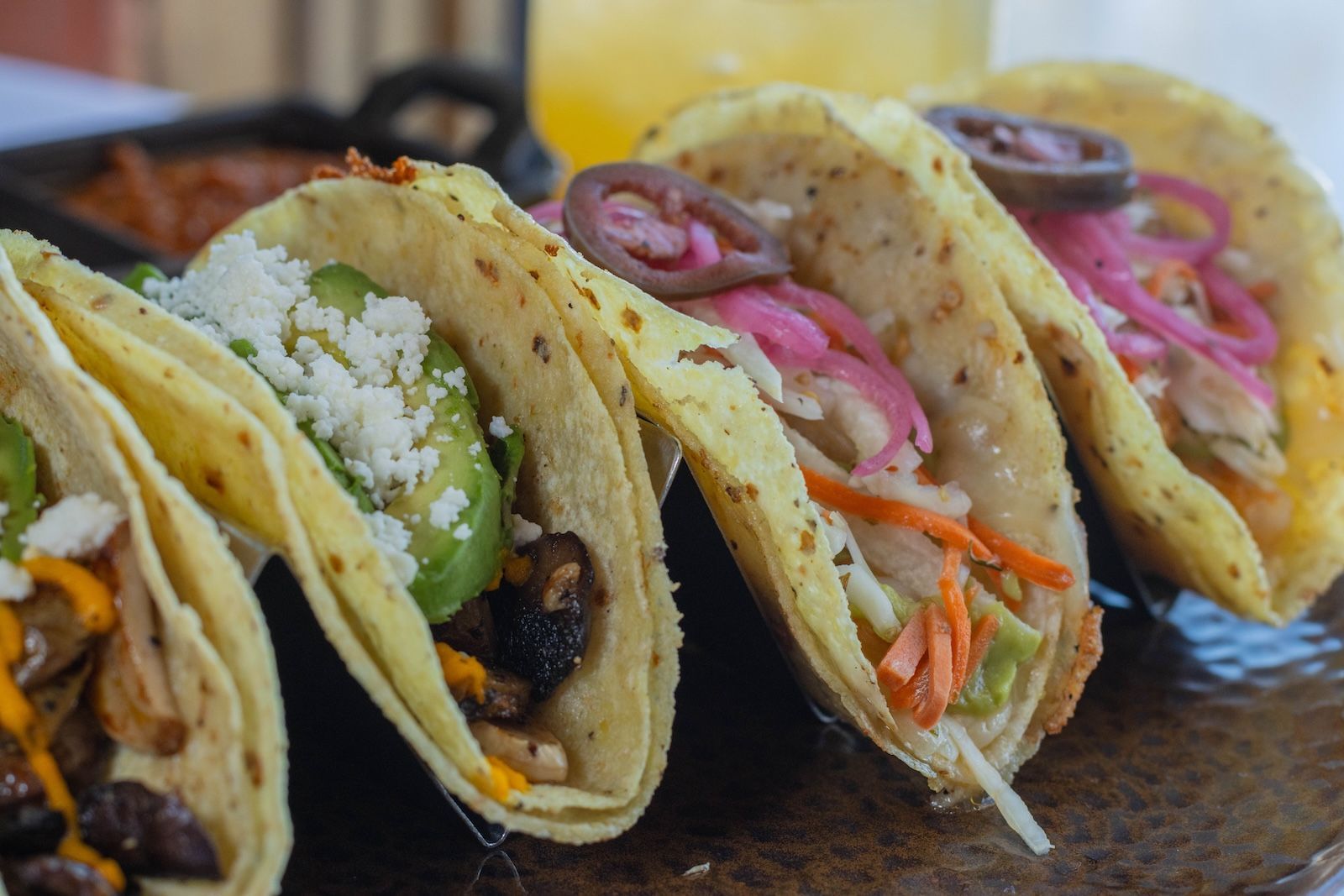
Corn tortillas taste of toasted corn. They are smaller and firmer, and they can crack if they are cold, so they are warmed before serving.
Flour tortillas taste mild and slightly rich from the fat. They are soft, stretchy and large, so they fold around heavy fillings without tearing.
Each has its traditional dishes:
- Corn: street tacos, enchiladas, tostadas, chilaquiles, tortilla soup and tortilla chips. Our crisp, sauced chilaquiles start from fried corn tortilla pieces, and cheesy birria tacos dipped in consommé are griddled corn tortillas.
- Flour: burritos, quesadillas, chimichangas and fajitas, all mainly made with flour tortillas. A tight burrito needs a large one; see our guide to building burritos.
When to Choose Corn and When to Choose Flour
- The fewest calories: Corn (why: About 52 per tortilla vs about 146)
- Low sodium: Corn (why: About 11 mg vs about 364 mg)
- Gluten-free: Corn (100% corn, labeled) (why: Wheat contains gluten)
- More protein per tortilla: Flour (why: About 3.9 g vs 1.4 g)
- A large wrap that will not tear: Flour (why: Bigger and more flexible)
- Classic tacos or enchiladas: Corn (why: The traditional base)
- Burritos, quesadillas, fajitas: Flour (why: The traditional base)
- Chips: Either (why: Corn is traditional; flour chips work too)
Frequently Asked Questions
Are corn tortillas healthier than flour tortillas?
Usually, yes. Corn tortillas have fewer calories, less fat, more fiber per gram and almost no sodium, according to USDA data. Flour tortillas have more protein, iron and folate.
How many calories are in a corn tortilla?
About 52 calories in one 24 g corn tortilla, based on USDA FoodData Central (FDC ID 175036). That is 218 calories per 100 g. Larger or thicker brands will run higher, so check the label.
How many calories are in a flour tortilla?
About 146 calories in one 49 g flour tortilla, based on USDA FoodData Central (FDC ID 167535). That is 297 calories per 100 g. Large burrito tortillas can weigh much more.
Are corn tortillas gluten-free?
Corn tortillas made only from corn, water and lime do not contain gluten. Some store-bought tortillas blend in wheat flour, so check the ingredients. If you have celiac disease, also ask about shared griddles and fryers.
Are corn tortillas good for weight loss?
Corn tortillas are a lower-calorie choice than flour tortillas, at about 52 calories each against about 146. They also carry more fiber by weight. Your total meal, including fillings and portions, matters more than the tortilla alone.
Why do corn tortillas break?
Corn tortillas break when they are cold or dry, because masa has no gluten to make it stretch. Warm them on a hot, dry skillet for 30 to 60 seconds a side, then keep them wrapped in a towel.
Corn and Flour at Mi Casa
At Mi Casa Mexican Restaurant & Cantina, we use both. Our sour cream, red chile and veggie enchiladas are all made on corn tortillas, and our chicken tortilla soup and pork chile verde come with warm corn tortillas.
Flour shows up where it belongs. Our fajitas are served with tortillas made from wheat, and our chips and dips plate brings both corn and flour tortilla chips. If you avoid gluten, check our dish-by-dish allergen list first.
See the plates on our Breckenridge menu for every corn and flour dish, served daily at 600 South Park Ave in Breckenridge.