
Fajitas Recipe: How to Make Them at Home
Fajitas are a Tex-Mex dish of grilled meat strips, classically skirt steak, cooked with onions and bell peppers and served in warm tortillas. To make them at home, marinate thin strips of steak, chicken or shrimp in lime, garlic and chile. Sear them in a very hot cast iron skillet, char the peppers and onions in the same pan, and wrap everything in tortillas at the table.
This one recipe works for all four classic fillings. They are the same four that diners order at Mi Casa: steak, chicken, shrimp or verdura fajitas.
Below you will find what fajitas are and where they come from, the best meat, a homemade seasoning, the ingredient list, step-by-step methods for each filling, the restaurant sizzle, safe temperatures, high-altitude notes, storage and answers to common questions.
What Are Fajitas?
A fajita is a Tex-Mex dish of strips of grilled skirt steak, cooked with sautéed onions and bell peppers and served on a flour or corn tortilla. Chicken, shrimp, other beef cuts and vegetables are now popular too.
The word comes from Spanish. Faja means "strip" or "belt," and fajita is a Tex-Mex diminutive for the small strips of meat cut from the beef skirt. Many restaurants bring the meat and vegetables to the table sizzling loudly on a metal platter, with warm tortillas and condiments. A mix of steak, chicken and shrimp on one platter is often called "Texas fajitas."
Where Fajitas Come From
Fajitas come from the ranch country of South and West Texas. The first culinary evidence of the cut, the cooking style and the Spanish nickname dates to the 1930s. Skirt steak was one of several scrap meats given to vaqueros, the Mexican cowboys, during cattle roundups.
The dish went commercial in 1969. That September, Austin meat market manager Sonny Falcón ran the first commercial fajita taco stand at a 16 de septiembre celebration in Kyle, Texas. The same year, Otilia Garza put fajitas on the menu at the Round-Up Restaurant in Pharr, Texas. She is credited with the sizzling-plate presentation, after being served queso flameado on a cast iron plate in Acapulco.
Restaurants such as Ninfa's in Houston, the Hyatt Regency in Austin and many in San Antonio made fajitas famous. The Oxford English Dictionary records no printed use of the word before 1971. In northern Mexico, the close relative is tacos de arrachera, arrachera being the Mexican name for skirt steak.
Best Meat for Fajitas
The best meat for steak fajitas is skirt steak, with flank steak as a strong second. For chicken fajitas, boneless thighs stay juicier than breasts. For shrimp fajitas, large shrimp are easiest to sear without overcooking.
- Steak: Skirt steak (good swap: Flank, flap or sirloin; why: Thin, beefy and quick; skirt is the original fajita cut)
- Chicken: Boneless, skinless thighs (good swap: Breasts, sliced or pounded thin; why: Thighs have more fat, so they forgive high heat)
- Shrimp: Large shrimp (16 to 20 per pound), peeled and deveined (good swap: Jumbo (21 to 25 per pound); why: Big shrimp brown before the centers overcook)
- Vegetable: Cauliflower, zucchini, mushrooms, potato (good swap: Portobello, sweet potato, squash; why: Hearty vegetables char and hold their shape)
Skirt steak is the boneless diaphragm muscle, prized for flavor more than tenderness. That is why it is marinated, seared fast and sliced across the grain. Flank steak is a common alternative in fajitas. The same cuts make good grilled carne asada for tacos, which uses the steak whole and chopped rather than in strips.
Homemade Fajita Seasoning
A dry blend gives fajitas their color and smoky warmth. Mix these together. Makes about 1/4 cup, enough for 2 pounds of meat.
- 2 teaspoons chili powder
- 2 teaspoons ground cumin
- 2 teaspoons smoked paprika
- 1 teaspoon garlic powder
- 1 teaspoon onion powder
- 1 teaspoon dried Mexican oregano
- 1 teaspoon kosher salt
- 1/2 teaspoon black pepper
- 1/4 teaspoon cayenne or chipotle powder (optional)
Store extra seasoning in a sealed jar for up to 6 months. It works on all four fillings.
Fajitas Ingredients
This recipe serves 4, about 3 fajitas each.
Fajita Marinade
- 1/4 cup fresh lime juice (2 to 3 limes)
- 3 tablespoons neutral oil, plus 2 tablespoons for cooking
- 3 garlic cloves, minced
- 1 tablespoon homemade fajita seasoning (above)
- 1 tablespoon soy sauce or Worcestershire sauce
- 1 teaspoon honey or brown sugar
- 2 tablespoons chopped cilantro
Steak, Chicken or Shrimp
Choose one, or split the amount between two:
- 1 1/2 pounds skirt or flank steak
- 1 1/2 pounds boneless, skinless chicken thighs or breasts
- 1 1/2 pounds large shrimp, peeled and deveined
- 1 1/2 pounds mixed vegetables: 1 small cauliflower, 1 zucchini, 8 ounces mushrooms and 1 medium potato
Peppers and Onions
- 3 bell peppers (red, yellow and green), sliced into 1/4-inch strips
- 1 large white or yellow onion, sliced into 1/4-inch half-moons
- 1 poblano or jalapeño, sliced (optional)
- 2 teaspoons homemade fajita seasoning
- Pinch of salt
For Serving
- 12 small flour tortillas (6 to 8 inches), or corn tortillas
- Guacamole, sour cream, pico de gallo and shredded cheese
- Lime wedges and chopped cilantro
Equipment
- Large cast iron skillet (12 inch) or a grill with a grill basket
- Second cast iron skillet or fajita platter for serving (optional)
- Glass dish or zip-top bags for marinating
- Instant-read meat thermometer
- Tongs, cutting board and sharp knife
- Clean kitchen towel or tortilla warmer
How to Make Steak Fajitas
- Mix the marinade. Whisk the lime juice, 3 tablespoons oil, garlic, seasoning, soy sauce, honey and cilantro.
- Marinate the steak. Coat the whole steak in the marinade and refrigerate it for 1 to 4 hours. Always marinate raw meat in the refrigerator.
- Prep the vegetables. Slice the peppers and onion while the steak marinates. Keep them in a separate bowl.
- Heat the skillet. Heat the cast iron over high heat for 5 minutes, until a drop of water skitters and evaporates at once.
- Dry and sear. Lift the steak from the marinade and pat it dry. Add 1 tablespoon oil to the pan and sear the steak 3 to 4 minutes per side for skirt, or 5 to 6 for flank.
- Check and rest. Pull it at 145 °F. Rest it on a board, loosely tented, for at least 3 minutes.
- Char the vegetables. Add the last tablespoon of oil, then the peppers, onion and seasoning. Cook 5 to 7 minutes, stirring only every minute or so, until charred at the edges but still crisp.
- Slice the steak. Cut it against the grain into strips about 1/4 inch thick and 3 inches long.
- Combine. Return the steak and its juices to the vegetables. Toss for 30 seconds and squeeze over a lime wedge.
- Serve. Bring the skillet to the table with warm tortillas and toppings.
Throw away the marinade that touched the raw meat. If you want extra to drizzle on, set some aside before adding the meat. Used marinade must be brought to a boil before it is safe to serve.
How to Make Chicken Fajitas
Chicken fajitas use the same marinade and pan. The changes are the cut, the timing and the temperature.
- Slice or leave whole. Leave thighs whole. Slice breasts in half horizontally into thin cutlets so they cook evenly.
- Marinate. Refrigerate the chicken in the marinade for 1 to 4 hours. For a garlic chipotle version, blend 1 chipotle in adobo into the marinade.
- Sear. Cook in the hot, oiled skillet 5 to 6 minutes per side for thighs or 4 to 5 for cutlets, until browned.
- Check the temperature. Chicken must reach 165 °F in the thickest part.
- Rest and slice. Rest 5 minutes, then slice into strips. Finish with the charred peppers and onions as above.
How to Make Shrimp Fajitas
Shrimp cook in minutes, so have everything else ready first.
- Season briefly. Toss the shrimp with half the marinade for 15 to 30 minutes in the fridge. Longer and the lime starts to turn them chalky. For a smoky version, use extra smoked paprika.
- Cook the vegetables first. Char the peppers and onions, then push them to the sides of the pan.
- Sear the shrimp. Lay the shrimp in the center in one layer. Cook 1 1/2 to 2 minutes per side, until pink and opaque.
- Check doneness. Fish and shellfish are safe at 145 °F. The flesh should be opaque all the way through.
- Toss and serve right away with lime.
How to Make Vegetable Fajitas
Vegetable fajitas, often called fajitas de verdura, need sturdy vegetables that can take high heat.
- Cut evenly. Cut cauliflower into small florets, zucchini into half-moons, mushrooms into thick slices and potato into 1/2-inch batons.
- Par-cook the potato. Microwave or boil the potato until just tender, then drain it well.
- Season. Toss all the vegetables with oil, lime juice, garlic and 1 tablespoon fajita seasoning. No marinating time is needed.
- Sear in batches. Cook the cauliflower and potato first, 6 to 8 minutes, then the zucchini and mushrooms, 4 to 5 minutes.
- Finish. Add the peppers and onions, toss until charred and serve.
Use vegetable oil and skip the Worcestershire, which usually contains anchovy, to keep them vegetarian.
How to Get the Sizzle at Home
The restaurant sizzle comes from a very hot metal platter. You can recreate it with two cast iron skillets.
- Put an empty cast iron skillet in a 450 °F oven for 15 minutes while you cook.
- Pull it out with a thick oven mitt and set it on a wooden board or trivet.
- Pile on the cooked meat and vegetables.
- Pour on 1 tablespoon of water mixed with a squeeze of lime. It will steam and hiss.
Warn everyone the pan is extremely hot, and keep the mitt on the handle. Cast iron holds heat well, which is why it gives a long sizzle.
Safe Internal Temperatures for Fajitas
Use an instant-read thermometer. Thin strips and charred marinades make doneness hard to judge by eye.
- Beef steak (skirt, flank, sirloin): 145 °F (rest time: At least 3 minutes)
- Chicken (thighs or breasts): 165 °F (rest time: Not required; 5 minutes keeps it juicy)
- Shrimp and other shellfish: 145 °F (rest time: None; serve right away)
- Reheated leftovers: 165 °F (rest time: None)
High-Altitude Notes
Breckenridge sits at about 9,600 feet. Fajitas cook almost the same at that height, with a few small changes.
- Faster drying. Low humidity at high elevation makes moisture in food evaporate faster during cooking. Do not overcook the strips; pull them right at temperature.
- Cover the vegetables if needed. Covering food during cooking helps hold in moisture. If the peppers char before they soften, cover the pan for 1 minute.
- Oven sizzle works the same. Oven temperatures are not affected by elevation, so preheat the serving skillet just as you would at sea level.
- Boiled potato takes longer. Water boils at about 193 °F at 10,000 feet instead of 212 °F at sea level. Give par-boiled potatoes for vegetable fajitas a few extra minutes.
Tips for Better Fajitas
- Do not crowd the pan. Too much meat at once drops the heat and steams it gray. Cook in two batches.
- Slice vegetables evenly. Strips of 1/4 inch cook at the same rate.
- Leave the vegetables alone. Stir only every minute or so to get char.
- Slice steak after cooking. Searing the steak whole keeps it juicier than cooking pre-cut strips.
- Warm the tortillas well. Heat each tortilla in a dry skillet 20 to 30 seconds per side and stack them in a towel. Fresh dough is even better; see soft flour tortillas made from scratch.
- Finish with acid. A last squeeze of lime brightens everything.
Make-Ahead, Storage and Reheating
- Prep ahead: Mix the marinade and slice the vegetables up to 1 day ahead. Keep them covered in the fridge.
- Freeze raw: Freeze steak or chicken in the marinade in flat bags. Thaw overnight in the fridge.
- Refrigerate: Refrigerate cooked fajita meat and vegetables within 2 hours of serving and use them within 3 to 4 days.
- Freeze cooked: Freeze cooked meat and vegetables in airtight containers for 3 to 4 months. Vegetables soften after freezing.
- Reheat: Reheat in a hot skillet with a splash of water until steaming and 165 °F. A hot pan brings back some char; a microwave makes the peppers soggy.
How to Serve Fajitas
Serve fajitas build-your-own style. Put the hot skillet in the center with warm tortillas and bowls of toppings.
The classic fajita toppings are guacamole, pico de gallo, queso, salsa, shredded cheese and sour cream. Shredded lettuce, refried beans and diced tomatoes are popular too. A bowl of creamy homemade guacamole is a must. If you are unsure which tomato topping to make, this guide to salsa versus pico de gallo explains the difference.
For the plate, the usual partners are fluffy tomato Mexican rice, beans and a warm cheese dip such as white queso dip. For the full list of sides, salads, drinks and desserts, see the best sides to serve with fajitas. Fajitas also pair well with margaritas; this guide to every margarita style helps you pick one.
Frequently Asked Questions
What is the best cut of steak for fajitas?
Skirt steak is the best cut for fajitas, and it is the original one. It is thin, beefy and cooks in minutes. Flank steak is the most common substitute, and flap or sirloin work too.
How long should you marinate fajita meat?
Marinate steak and chicken for 1 to 4 hours in the refrigerator. Shrimp need only 15 to 30 minutes. Long soaks in lime juice can turn the surface mushy or chalky.
Are fajitas Mexican or Tex-Mex?
Fajitas are Tex-Mex. They come from the ranches of South and West Texas, where Mexican vaqueros cooked skirt steak in the 1930s. Northern Mexico has a close cousin, tacos de arrachera.
How do you cut peppers and onions for fajitas?
Cut bell peppers into strips about 1/4 inch wide, top to bottom. Halve the onion through the root and slice it into 1/4-inch half-moons. Even strips cook and char at the same rate.
How many fajitas per person?
Plan on 3 small fajitas per adult, or about 1/3 pound of raw meat per person. Hungry skiers and big eaters may want 4. Kids usually eat 1 or 2.
Should you use corn or flour tortillas for fajitas?
Either is traditional: fajitas are served on a flour or corn tortilla. Flour tortillas are soft and strong enough to hold juicy meat and vegetables. Corn tortillas add toasty corn flavor and are naturally gluten-free.
Fajitas at Mi Casa in Breckenridge
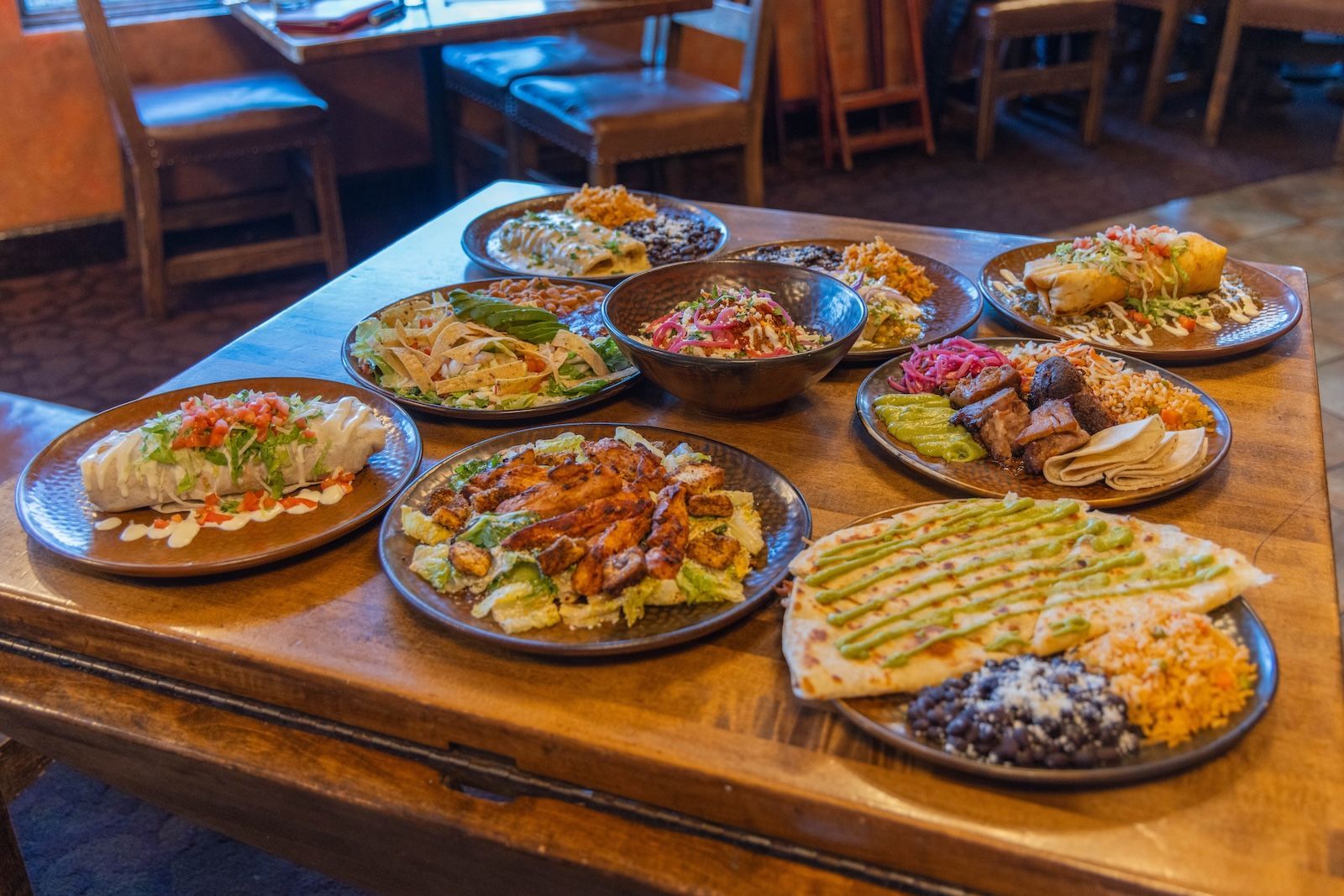
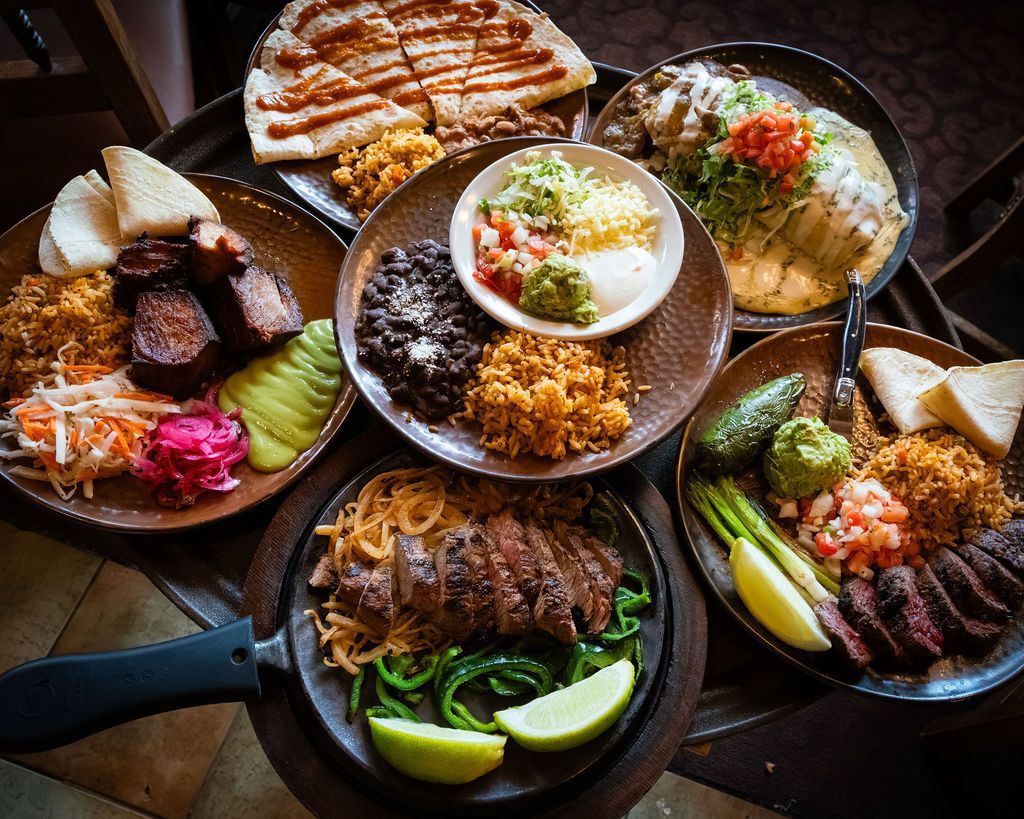
Mi Casa Mexican Restaurant & Cantina has served sizzling fajitas in Breckenridge since 1981. We offer four kinds: steak with bistro tender, ancho and morita chile and garlic; chicken with garlic chipotle; shrimp with smoked paprika chile; and verdura with cauliflower, zucchini, mushrooms and potato. For groups, our catering menu for parties sells fajitas by the half dozen or dozen. They come with guajillo grilled onions, roasted poblano chiles, guacamole, sour cream, pico de gallo, shredded cheese, rice and black beans. You can also order them through Mi Casa takeout.